Home breadcrumb spacer

The Women's Refugee Commission released the first major report and resource kit to address the critical needs of this all-but-invisible population.

The report Disabilities Among Refugees and Conflict-affected Populations was the culmination of a six-month project led by the Women’s Refugee Commission, co-funded by the United Nations High Commissioner for Refugees (UNHCR). It is based on fact-finding missions in Ecuador, Yemen, Jordan, Thailand and Nepal (as well as significant field input from Darfur and Kenya), interviews with United Nations agencies and local organizations in refugee settings, and group discussions with refugees and others uprooted from their homes.

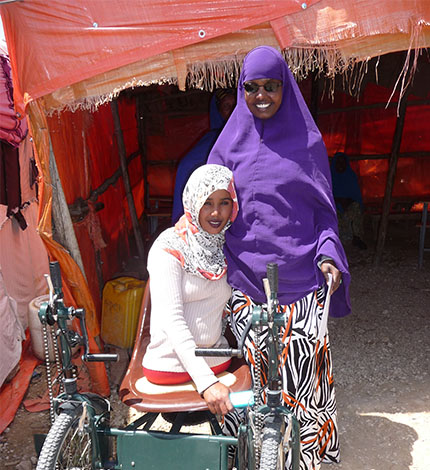
The report notes serious problems with the physical layout and infrastructure of the camps—few services are accessible to people with disabilities, including toilets, shelters and health facilities. In general, no special accommodations are made for getting food and other supplies that refugees with disabilities need on a daily basis. Many are housebound, rarely leaving their shelters. Not surprisingly, their voices go unheard in decision-making activities within their communities.

We also found a disparity between refugee camps and urban areas: in camps there is a greater awareness about the needs of the disabled community and better services than in urban environments, where refugees with disabilities are unable to access services offered by the host government and virtually no one is providing special assistance to them. The Women’s Refugee Commission also found greater discrimination and stigmatization towards people with psychosocial impairments; assistance programs, when available, tend to focus on those with physical and sensory disabilities.

There were also a few positive developments, in particular with regard to children in refugee camps. Many children with disabilities are attending primary schools, some of which have special education teachers. For the parents of children with disabilities, some camps offer support groups as well as home visits for instruction in sign language, Braille and rehabilitative exercises.

To reinforce the report’s findings and improve protection and services for refugees with disabilities, the Women’s Refugee Commission has created a resource kit to provide practical guidance for humanitarian field staff. Major recommendations include making refugee camps accessible to people with disabilities and ensuring that they have full and equal access to all services provided.

  • Download our fact sheet on refugees and conflict-affected persons with disabilities.
  • Download our report on refugees and conflict-affected persons with disabilities.
  • Download our resource kit for field workers.
  • Download our powerpoint of a 3-day training to raise awareness and facilitate participation of people with disabilities in community decision-making.
  • Download our presentation about our partnership with UNHCR to implement their guidance on displaced peoples with disabilities and gender-based violence.
  • Download our findings from our consultations with disabled peoples in seven countries about their vulnerability to gender-based violence.